
Botanica from the Gardens and Peripheries of Future:
Nymphoides olearius
2026 Metal frame, glazed stoneware, fabric, wax, glass beads.
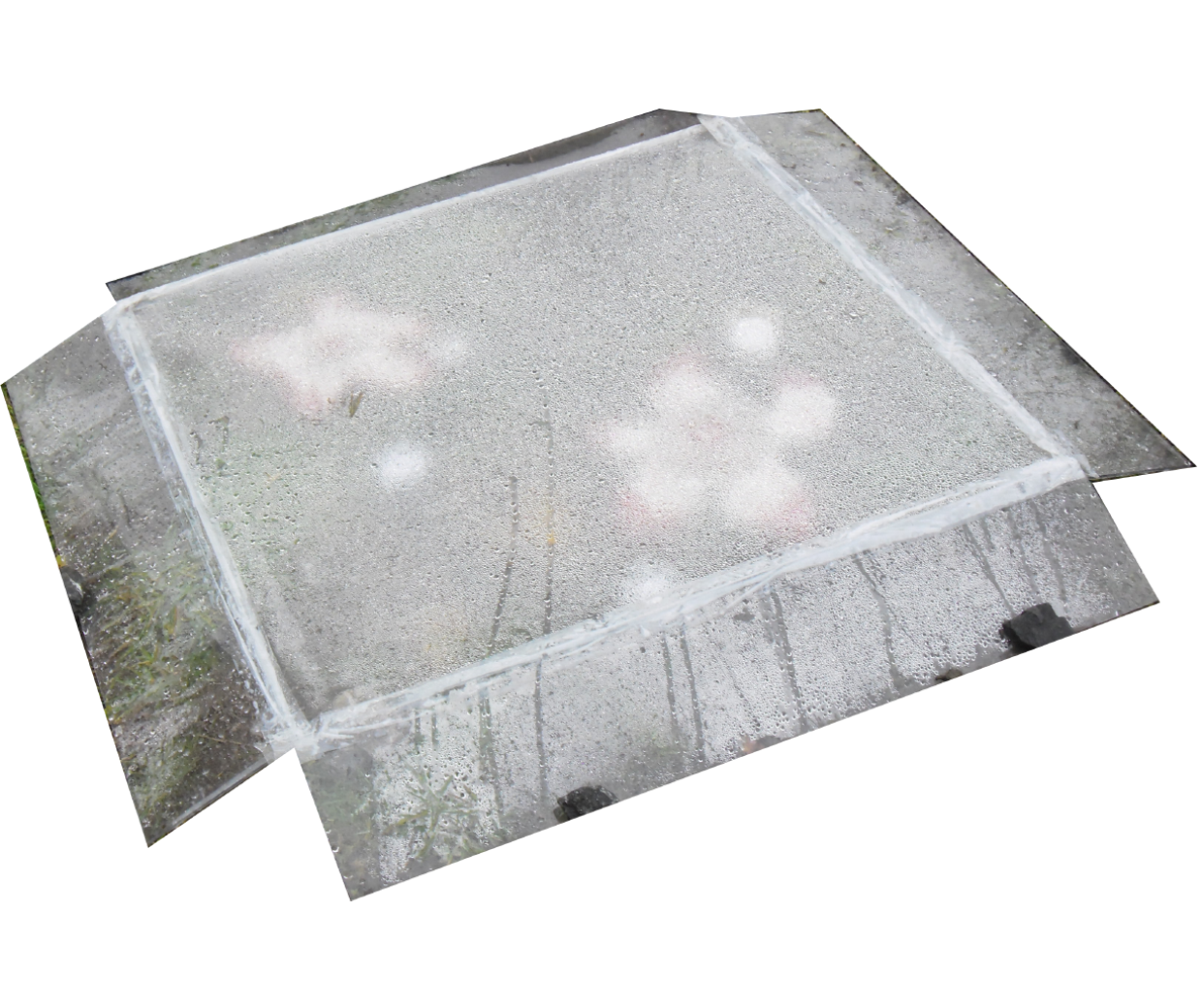
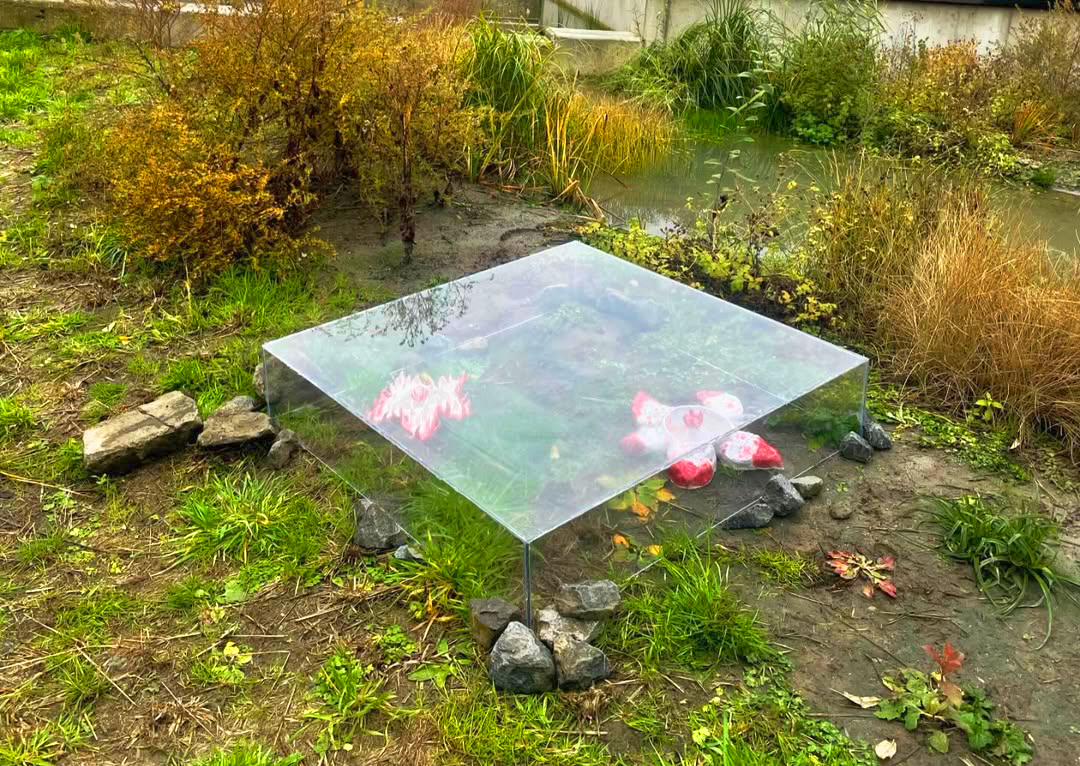
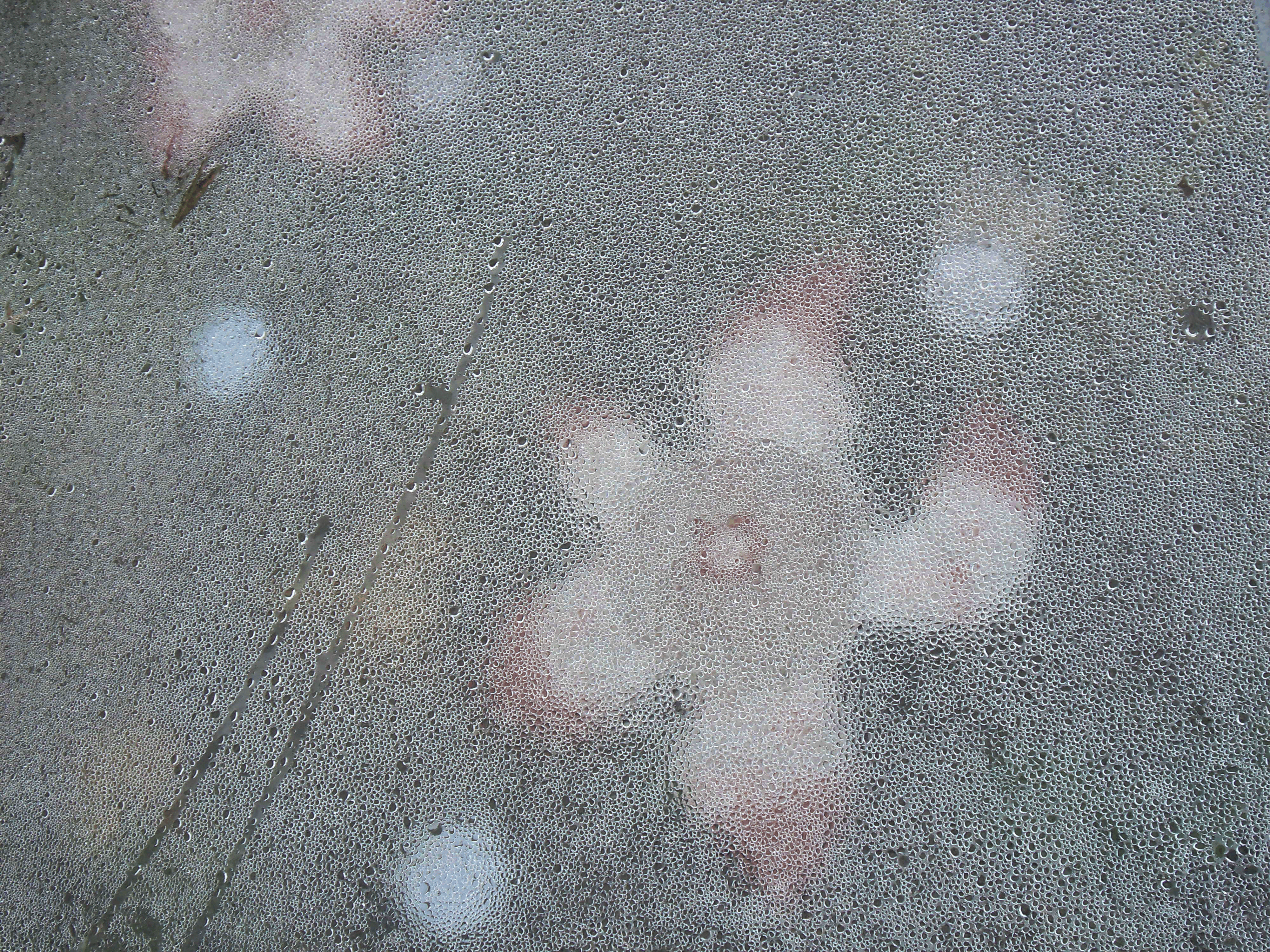
Nymphoides olearius evolved in direct response to oil spills, developing the ability to ingest oil particles, which gives its leaves and flowers their shimmery veins. In adapting, it also stopped overgrowing its environment, becoming a polluter turned cleaner. The sculpture follows this aquatic perennial across the boundary between fresh and salt water.
Nymphoides olearius is a part of ongoing series about speculative botanical futures, exploring various plant species and their possible evolution in response to human-induced catastrophes. This project questions whether plant knowledge can help with facilitation of lost third places while proposing a path towards a multispecies future where harmonious coexistence is possible.
Exhibited at
Alle Grond: Alle Tijd Festival, Rotterdam, NL
Nymphoides olearius
2026 Metal frame, glazed stoneware, fabric, wax, glass beads.
Nymphoides olearius evolved in direct response to oil spills, developing the ability to ingest oil particles, which gives its leaves and flowers their shimmery veins. In adapting, it also stopped overgrowing its environment, becoming a polluter turned cleaner. The sculpture follows this aquatic perennial across the boundary between fresh and salt water.
Nymphoides olearius is a part of ongoing series about speculative botanical futures, exploring various plant species and their possible evolution in response to human-induced catastrophes. This project questions whether plant knowledge can help with facilitation of lost third places while proposing a path towards a multispecies future where harmonious coexistence is possible.
Exhibited at
Alle Grond: Alle Tijd Festival, Rotterdam, NL


Botanica from the Gardens and Peripheries of Future:
Rafflesia itineris
2025multimedia sculptural installation
6 earthenware sculptures, collected insects, colored resin, alginate bioyarn
Rafflesia itineris is a rootless holo-parasite that abandoned the rainforest for the city. Evolving from a single travelling cell, it flowers in three weeks instead of ten months, blooming in a flood of acid-green digestive liquid that draws insects in before transforming them into nutrients. The sculpture renders this opportunistic traveller at the moment of full bloom.
Installation Rafflesia itineris is a part of ongoing series about speculative botanical futures, exploring various plant species and their possible evolution in response to human-induced catastrophes. This project questions whether plant knowledge can help with facilitation of lost third places while proposing a path towards a multispecies future where harmonious coexistence is possible.
Exhibited at
Alle Grond: Alle Tijd Festival, Rotterdam, NL
Meander, Leuven, BE
C3, Rotterdam, NL
Rafflesia itineris
2025multimedia sculptural installation
6 earthenware sculptures, collected insects, colored resin, alginate bioyarn
Rafflesia itineris is a rootless holo-parasite that abandoned the rainforest for the city. Evolving from a single travelling cell, it flowers in three weeks instead of ten months, blooming in a flood of acid-green digestive liquid that draws insects in before transforming them into nutrients. The sculpture renders this opportunistic traveller at the moment of full bloom.
Installation Rafflesia itineris is a part of ongoing series about speculative botanical futures, exploring various plant species and their possible evolution in response to human-induced catastrophes. This project questions whether plant knowledge can help with facilitation of lost third places while proposing a path towards a multispecies future where harmonious coexistence is possible.
Exhibited at
Alle Grond: Alle Tijd Festival, Rotterdam, NL
Meander, Leuven, BE
C3, Rotterdam, NL


Botanica Expedition for the Peripheries of Future
2026 Happening; initiated during Alle Tijd Festival: Alle Grond 2026.
Botanical Expedition for the Peripheries of Future is a site-specific treasure hunt on the Eiland van Brienenoord. Six sculptural plant species, imagined as evolving under the pressures of the Anthropocene, are hidden across the island. Visitors navigate using an illustrated map guide. The sculptures combine stoneware, resin, and algae yarn, designed to weather naturally alongside the landscape. This project shifts the visitor’s role from passive spectator to active explorer, using the act of searching as a form of attention that makes the island's existing ecology more visible. It is a journey of discovery and recuperation.
2026 Happening; initiated during Alle Tijd Festival: Alle Grond 2026.
Botanical Expedition for the Peripheries of Future is a site-specific treasure hunt on the Eiland van Brienenoord. Six sculptural plant species, imagined as evolving under the pressures of the Anthropocene, are hidden across the island. Visitors navigate using an illustrated map guide. The sculptures combine stoneware, resin, and algae yarn, designed to weather naturally alongside the landscape. This project shifts the visitor’s role from passive spectator to active explorer, using the act of searching as a form of attention that makes the island's existing ecology more visible. It is a journey of discovery and recuperation.


Map designed by Nina Neczliová.
Botanica from the Gardens and Peripheries of Future:
Rafflesia litoralis
2025 earthenware sculptures, collected insects, colored resin
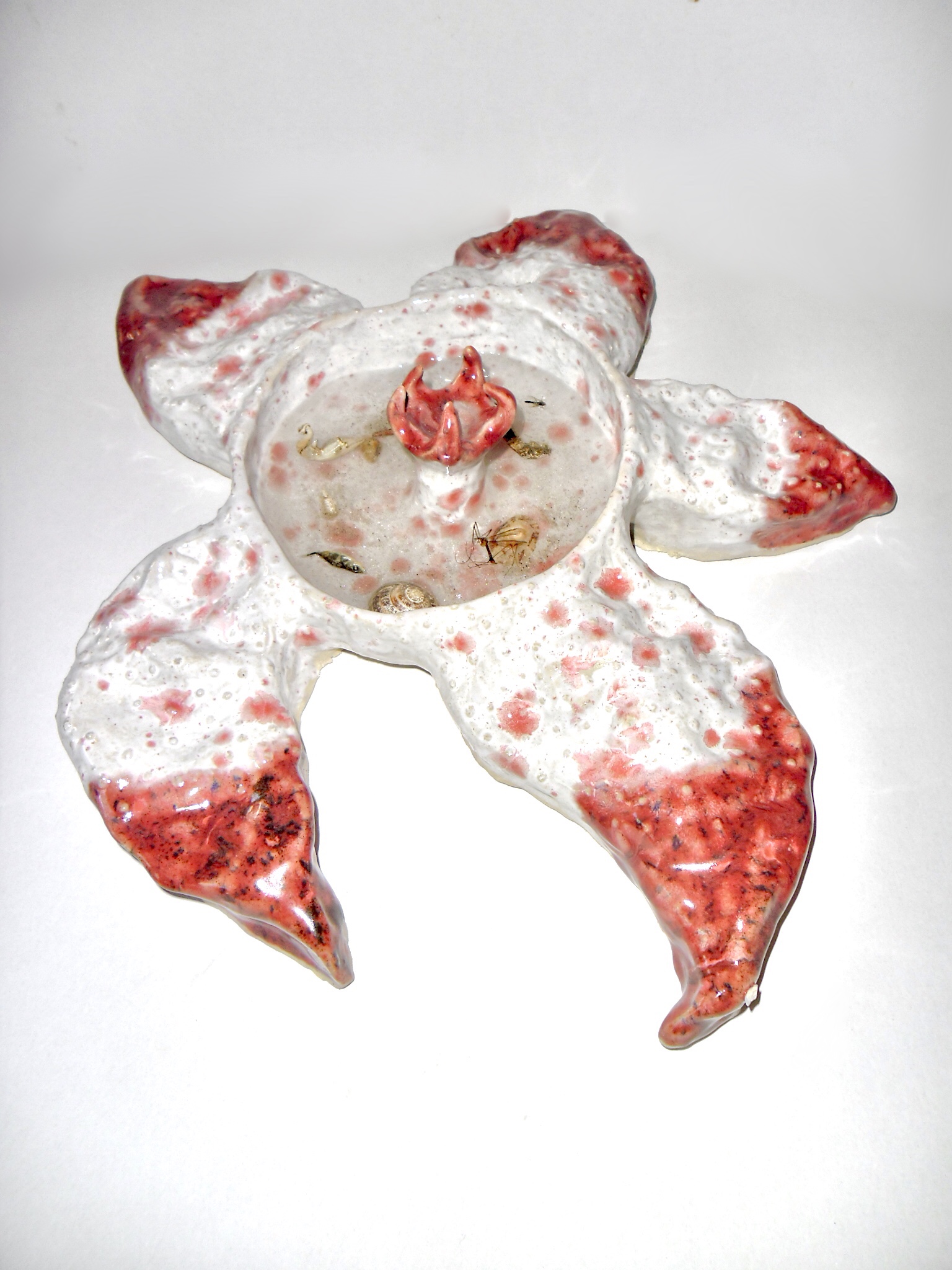
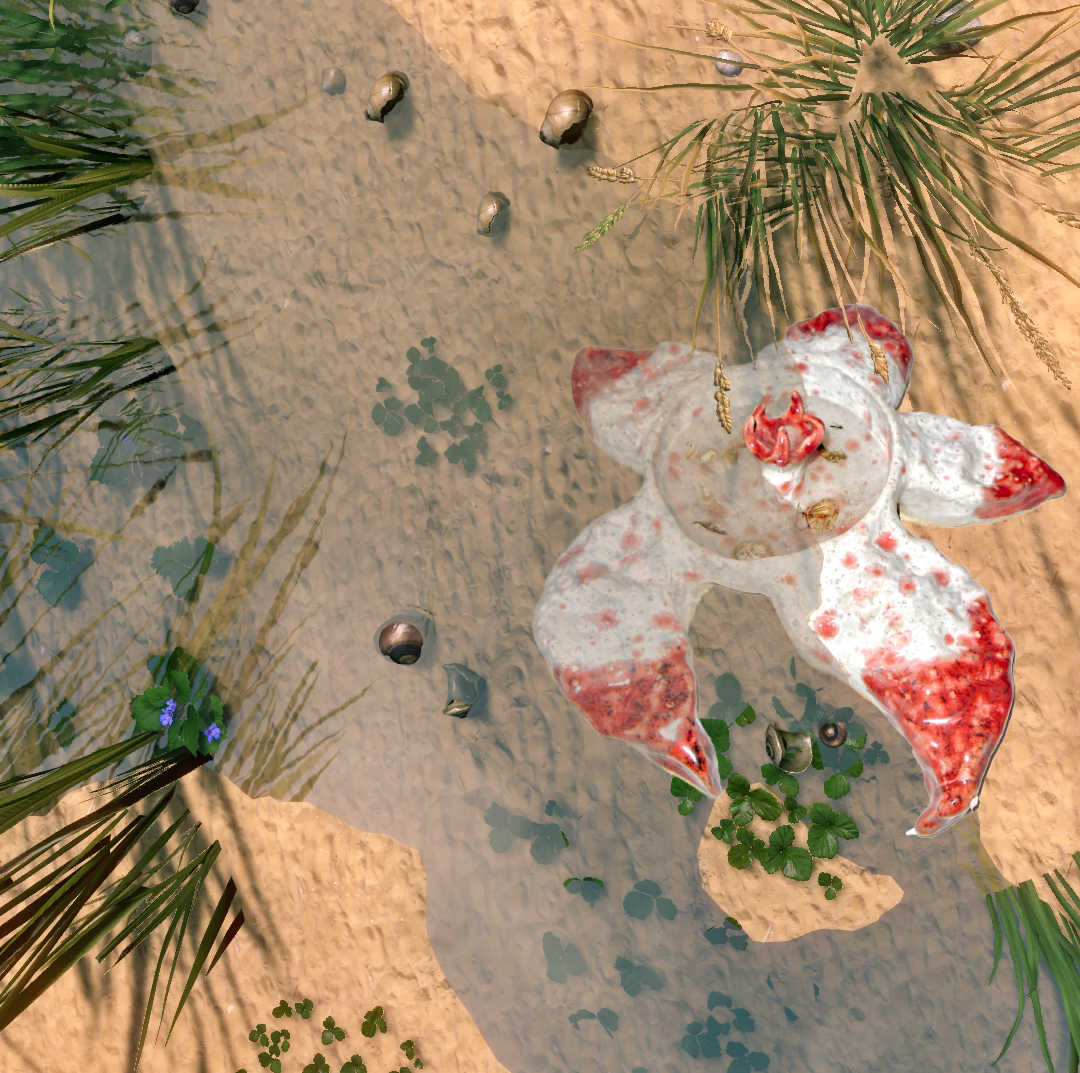
A coastal cousin of the travelling corpse lily, Rafflesia litoralis grows in almost translucent white, masquerading as a tidepool half-buried in the sand. To survive the more vicious creatures of the shoreline, it developed extendable spikes hidden within its petals, a defense against anything weighing on its body. The sculpture captures this quiet, defensive bloom at the water's edge.
Rafflesia litoralis is a part of ongoing series about speculative botanical futures, exploring various plant species and their possible evolution in response to human-induced catastrophes.
The carrousel includes the plant positioned in a 3D modelled environment made with the help of Flowscape.
![]()
![]()
![]() Rafflesia litoralis, presented publicly during Meander, an exhibition for Fringe Festival in Leuven, BE.
Rafflesia litoralis, presented publicly during Meander, an exhibition for Fringe Festival in Leuven, BE.
Rafflesia litoralis
2025 earthenware sculptures, collected insects, colored resin
A coastal cousin of the travelling corpse lily, Rafflesia litoralis grows in almost translucent white, masquerading as a tidepool half-buried in the sand. To survive the more vicious creatures of the shoreline, it developed extendable spikes hidden within its petals, a defense against anything weighing on its body. The sculpture captures this quiet, defensive bloom at the water's edge.
Rafflesia litoralis is a part of ongoing series about speculative botanical futures, exploring various plant species and their possible evolution in response to human-induced catastrophes.
The carrousel includes the plant positioned in a 3D modelled environment made with the help of Flowscape.





Open Gate to the Fossil Garden
2026multimedia sculptural installation
refurbished cabinet door, pencil drawing; plaster castings, variable sizes.
This work was possible thanks to Milieudefensie Jong, showcased in their curation for VrijPaleis, Amsterdam, NL.
Open Gate to the Fossil Garden transforms a discarded studio cabinet door into a speculative portal to a “fossil garden.” The outer surface shows sketchbook‑style pencil images of an untended garden behind a gate, while the interior becomes a miniature cabinet of curiosities, housing fictional flowers imagined for this garden.
Each specimen originates from research sketches, based on the memories of gardens from artists' childhood, carved in clay and cast in plaster as “techno‑fossils” that appear both newly discovered and extinct.
The original hinges remain functional, allowing the door to swing open and invite viewers to step into the imagined ecosystem.
By repurposing waste into a narrative device, the work critiques capitalist “use‑and‑discard” logic, visualises a post‑capitalist world where growth‑driven economies have halted, and encourages reflection on alternative relationships with nature and future biodiversity.
2026multimedia sculptural installation
refurbished cabinet door, pencil drawing; plaster castings, variable sizes.
This work was possible thanks to Milieudefensie Jong, showcased in their curation for VrijPaleis, Amsterdam, NL.
Open Gate to the Fossil Garden transforms a discarded studio cabinet door into a speculative portal to a “fossil garden.” The outer surface shows sketchbook‑style pencil images of an untended garden behind a gate, while the interior becomes a miniature cabinet of curiosities, housing fictional flowers imagined for this garden.
Each specimen originates from research sketches, based on the memories of gardens from artists' childhood, carved in clay and cast in plaster as “techno‑fossils” that appear both newly discovered and extinct.
The original hinges remain functional, allowing the door to swing open and invite viewers to step into the imagined ecosystem.
By repurposing waste into a narrative device, the work critiques capitalist “use‑and‑discard” logic, visualises a post‑capitalist world where growth‑driven economies have halted, and encourages reflection on alternative relationships with nature and future biodiversity.


